
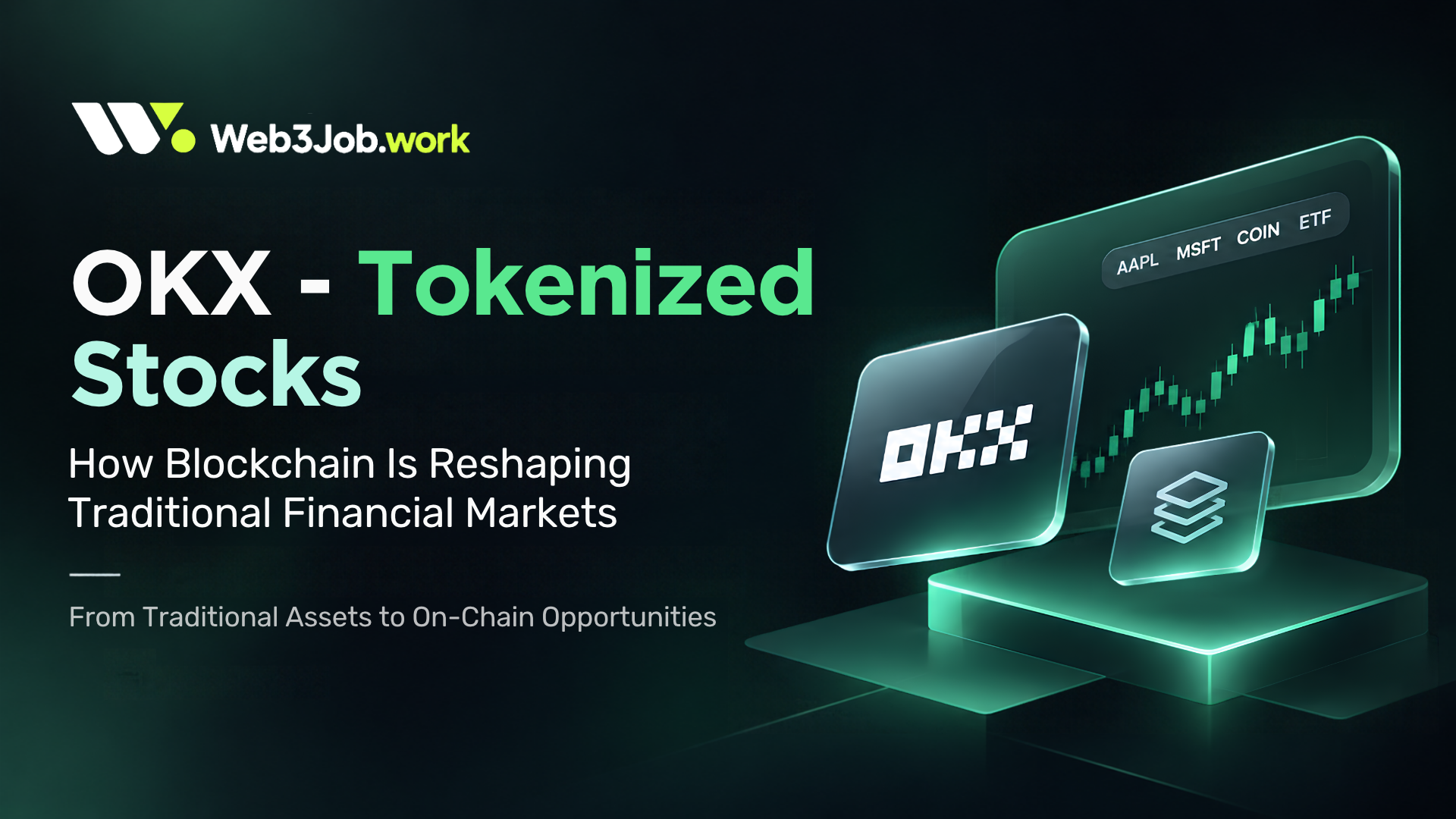
OKX Tokenized Stocks represent a significant step in how blockchain technology is reshaping traditional financial markets, moving beyond cryptocurrencies and into equity trading. On November 11, 2026, crypto exchange OKX and Intercontinental Exchange (ICE), the parent company of the New York Stock Exchange (NYSE), announced plans to launch their joint venture's Tokenized Securities Venue (TSV) on November 23.
The initiative, operating under the name OKXICE, is expected to bring more than 70 digital securities to eligible U.S. investors, including assets associated with Coinbase, Circle, Robinhood, and Strategy, alongside 59 exchange-traded funds (ETFs) from Direxion.
With the ability to trade eligible tokenized securities around the clock, OKX Tokenized Stocks could represent an important step toward integrating traditional financial markets with blockchain infrastructure.
But what exactly are tokenized stocks, how does OKXICE work, and what could this development mean for the future of global finance?
Section 01 of 08
What Are Tokenized Stocks?
Tokenized stocks are digital representations of traditional company shares issued or recorded on a blockchain. They aim to connect conventional equity ownership with blockchain-based infrastructure, allowing securities-related transactions to take place through digital tokens.
Unlike cryptocurrencies such as Bitcoin or Ethereum, tokenized stocks are linked to traditional financial assets. Their value and economic characteristics are tied to the underlying securities, depending on the legal and technical structure of the product.
Stock tokenization can offer several potential advantages:
Fractional ownership: Certain tokenization structures can make it easier to represent smaller portions of financial assets.
24/7 trading: Blockchain-based platforms may support trading beyond conventional stock exchange hours.
Faster settlement: On-chain transaction infrastructure can reduce settlement delays.
Greater accessibility: Digital platforms may create additional channels for eligible investors to access financial markets.
Programmable financial assets: Smart contracts can automate specific processes involving transfers, restrictions, and corporate actions.
However, not every tokenized stock provides direct legal ownership of the underlying share. Investors must understand the rights attached to each token, the issuer structure, and the regulatory framework governing the product.
Section 02 of 08
OKX and ICE: Bringing Traditional Finance On-chain
The OKXICE partnership combines two major components of the financial industry: cryptocurrency trading infrastructure and established traditional market expertise.
OKX is a global digital asset exchange with blockchain infrastructure and a broad crypto-native user base. Intercontinental Exchange (ICE), meanwhile, operates major financial market infrastructure, including the New York Stock Exchange.
Their joint venture reflects a broader industry trend: traditional financial institutions and digital asset companies are increasingly exploring blockchain-based market infrastructure.
According to OKX's November 11 announcement, the OKXICE Tokenized Securities Venue is scheduled to open on November 23, 2026.
The platform expects to list more than 70 assets, including securities from:
Coinbase
Circle
Robinhood
Strategy
BitGo
Securitize
Better.com
Direxion is also expected to contribute 59 ETFs to the platform.
Importantly, more than 70 refers to the expected number of assets, not 70 individual company stocks. Not all announced assets are necessarily expected to be available on the first trading day.
The initial launch will be limited to eligible U.S.-based OKX customers who complete the required onboarding and identity verification procedures.
Section 03 of 08
How Does OKX Tokenized Stock Trading Work?
One of the most interesting aspects of OKXICE is its underlying blockchain infrastructure.
The platform is designed to combine tokenization technology, decentralized liquidity mechanisms, and permissioned access controls.
Blockchain Infrastructure: X Layer and Uniswap v4
Trading on OKXICE TSV is planned to take place through automated market maker (AMM) liquidity pools built on Uniswap v4, deployed on X Layer, OKX's Ethereum Layer 2 network.
This infrastructure allows tokenized securities to interact with blockchain-based trading mechanisms while maintaining access restrictions.
Smart contracts are designed to restrict trading and liquidity provision to eligible wallets, helping ensure that participation follows the venue's regulatory and onboarding requirements.
Tokenization Infrastructure: Securitize
Securitize will provide the tokenization infrastructure supporting the venue.
According to OKX, each digital token will represent a security entitlement backed on a one-to-one basis by an underlying U.S. share.
The structure is designed to preserve applicable shareholder rights and economic benefits, including:
Dividend entitlements
Voting rights
Participation in corporate actions
This distinction is important because tokenized securities are not simply cryptocurrencies that track stock prices. Their legal structure and connection to underlying shares determine the rights investors receive.
Self-Custody and Investor Access
Another notable feature is the use of self-custodial wallets.
Eligible customers will hold their digital securities in their own wallets rather than having OKXICE TSV control their assets or private keys.
Nevertheless, access is restricted. Investors must satisfy eligibility requirements, complete identity verification, and activate an approved CeDeFi Wallet.
These restrictions demonstrate how blockchain-based financial products can combine digital asset technology with permissioned financial market participation.
Section 04 of 08
Why Is Stock Tokenization Gaining Attention?
The OKXICE announcement comes amid growing interest in Real-World Asset (RWA) tokenization.
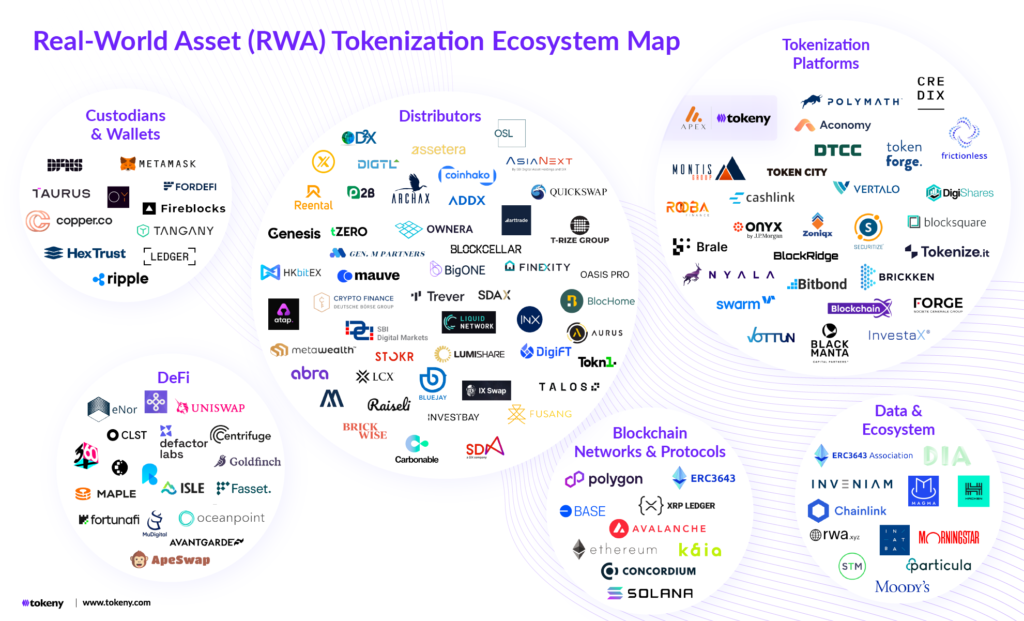
RWA refers to the process of representing real-world assets, such as equities, bonds, funds, and real estate, through blockchain-based tokens.
The broader appeal of tokenization comes from its potential to improve how financial assets are issued, transferred, settled, and managed.
24/7 Access to Financial Markets
Traditional stock exchanges operate within defined trading sessions. Blockchain-based markets, by contrast, can support continuous trading infrastructure.
OKXICE aims to allow eligible investors to trade tokenized securities around the clock.
This could be particularly relevant to global investors who operate across different time zones and cannot always access traditional market sessions.
However, continuous trading does not automatically guarantee continuous liquidity or stable pricing.
Faster and More Efficient Settlement
Traditional securities transactions involve multiple intermediaries and settlement processes.
Blockchain infrastructure can potentially simplify parts of this process by recording transactions on a shared digital ledger.
The result could be more efficient settlement, improved transparency, and reduced operational complexity.
The actual benefits will depend on the platform's legal structure, settlement arrangements, and integration with traditional financial infrastructure.
Connecting Traditional Finance and DeFi
Tokenized securities also create opportunities for interaction between traditional financial assets and decentralized finance (DeFi).
By representing securities on-chain, platforms can explore new financial applications involving digital wallets, smart contracts, and blockchain-based liquidity mechanisms.
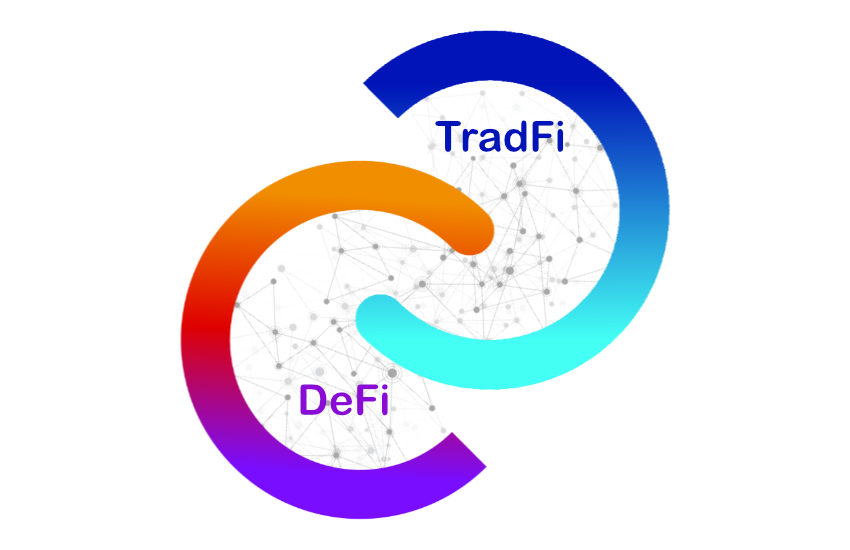
This creates a potential bridge between two historically separate ecosystems: traditional finance (TradFi) and decentralized finance.
Section 05 of 08
Regulatory Challenges: Not Every Company Supports Tokenization
Despite its potential, stock tokenization faces significant regulatory and market-structure challenges.
One of the most notable issues surrounding OKXICE is corporate opposition.
According to The Block's November 11 report, 67 companies had opted out of having their shares traded through the proposed venue as of November 5.
Some of the companies reported to have objected include Meta, Tesla, Netflix, Costco, and The Home Depot.
These objections highlight an important concern: companies may want greater control over how their shares are represented and traded through third-party blockchain platforms.
Key concerns include:
Shareholder rights: Whether tokenized securities preserve the same legal rights as traditional shares.
Market integrity: Whether trading outside established market structures could affect price discovery and transparency.
Liquidity fragmentation: Whether additional trading venues could divide liquidity across different markets.
Investor protection: How regulators and platforms will address custody, disclosures, and potential disputes.
Corporate control: Whether companies should have the ability to determine how their securities are tokenized and distributed.
The SEC's Innovation Exemption provides a regulatory pathway for qualifying digital securities trading venues under specified conditions. However, it should not be interpreted as blanket approval of every tokenized stock or an endorsement of every platform.
The regulatory framework and issuer participation will remain important factors in determining how quickly the market develops.
Section 06 of 08
OKX Tokenized Stocks: How Blockchain Is Reshaping Traditional Financial Markets
The OKXICE initiative represents more than a new trading feature for cryptocurrency users. It reflects a broader shift toward integrating blockchain technology into traditional financial infrastructure.
Several developments could emerge as tokenized securities gain traction.
First, traditional financial institutions may increasingly adopt blockchain infrastructure. Banks, exchanges, asset managers, and financial technology companies are exploring tokenization as a way to modernize existing financial services.
Second, the boundary between TradFi and DeFi could become less distinct. As traditional securities become available through blockchain-based infrastructure, investors may gain access to new financial products and trading mechanisms.
Third, regulatory clarity will become a competitive advantage. Platforms that combine technological innovation with transparent ownership structures, investor protections, and regulatory compliance may be better positioned to attract institutional participation.
Nevertheless, the success of tokenized securities will depend on more than technology. Liquidity, legal certainty, issuer participation, and investor confidence will all play important roles.
Section 07 of 08
Conclusion
OKX Tokenized Stocks marks another important development in the convergence of blockchain technology and traditional financial markets.
Through its partnership with Intercontinental Exchange, OKX is preparing to introduce a tokenized securities venue that combines X Layer infrastructure, Uniswap v4 liquidity pools, and Securitize's tokenization technology.
The initiative could help expand access to securities trading and demonstrate how blockchain infrastructure can support financial markets beyond cryptocurrencies.
However, regulatory challenges, corporate objections, and liquidity considerations remain significant obstacles.
As the November 23 launch approaches, OKXICE will be an important development to watch in the evolving RWA and digital securities landscape.
For businesses, investors, and financial technology professionals, the broader question is no longer whether blockchain can interact with traditional finance, but how that integration will reshape the structure of global financial markets.
Section 08 of 08
Frequently Asked Questions
1. What are OKX Tokenized Stocks?
OKX Tokenized Stocks are digital securities offered through OKXICE's Tokenized Securities Venue. Each token is designed to represent a security entitlement backed one-to-one by an underlying U.S. share.
2. When will OKXICE launch tokenized stock trading?
OKXICE has announced November 23, 2026, as the planned opening date for its Tokenized Securities Venue.
3. Which stocks will be available on OKXICE?
The expected lineup includes securities from Coinbase, Circle, Robinhood, Strategy, BitGo, Securitize, and Better.com, alongside 59 Direxion ETFs. Not all assets are necessarily expected to be available on launch day.
4. Can investors trade tokenized stocks 24/7?
The venue is designed to support round-the-clock trading for eligible U.S. customers. However, continuous trading does not guarantee continuous liquidity.
5. What blockchain does OKXICE use?
The venue uses X Layer, OKX's Ethereum Layer 2 network, with liquidity pools built on Uniswap v4.
6. Are tokenized stocks the same as traditional shares?
Not necessarily. Their legal structure determines the rights investors receive. OKXICE says its tokens represent security entitlements backed by underlying U.S. shares, with applicable dividend, voting, and corporate action rights.